
 0808 164 1084
8 minute read

A Guide to Fire Alarm Regulations for Commercial Buildings




A school fire risk assessment is essential for protecting pupils, staff, visitors, and school buildings. Schools are busy, complex environments with multiple fire risks, from classrooms and kitchens to science labs, boiler rooms, sports halls, and shared circulation areas.
At City Fire Protection, we provide professional fire risk assessments for schools across London, Birmingham, and the wider UK through the support of the LS Fire Group. Our experienced assessors help headteachers, school business managers, site teams, academy trusts, governors, and local authorities understand their fire safety responsibilities and take practical steps to reduce risk.
If you need a fire risk assessment for schools, fill in our online form and a member of our team will be in touch.
Schools have a legal and moral duty to provide a safe environment for everyone on site. A fire incident in an educational setting can put pupils, staff, contractors, parents, and visitors at risk, while also causing major disruption to learning and school operations.
A professional fire risk assessment in schools helps identify how a fire could start, who may be affected, and what measures are needed to reduce the likelihood and impact of an incident. This includes reviewing the physical building, existing fire safety systems, evacuation arrangements, and how fire safety is managed day to day.
Under the Regulatory Reform (Fire Safety) Order 2005, the responsible person must ensure that fire risks are assessed and appropriate fire safety measures are in place. For schools, this responsibility may sit with the employer, local authority, academy trust, governing body, headteacher, or another person with control over the premises.
Fire risk assessments in schools require a careful and practical approach because educational buildings are used by large numbers of people, many of whom are children or young people. This means evacuation procedures, staff responsibilities, communication, and supervision must all be considered in detail.
Schools may include a wide range of spaces with different risks. A classroom presents different hazards from a science lab, kitchen, design and technology workshop, sports hall, or plant room. Some schools also operate outside normal teaching hours for clubs, lettings, community use, breakfast clubs, after-school care, and events.
A good school fire risk assessment must consider how the building is used throughout the full school day, not just during lesson time.
A fire risk assessment for schools will usually review a wide range of hazards linked to daily school operations. Common fire risks include:
Identifying these risks allows schools to take proportionate action, improve safety, and reduce the chance of fire disrupting learning.
The responsible person for a school will depend on the type of school and how it is managed. In maintained schools, responsibility may sit with the local authority, headteacher, or governing body. In academies and multi-academy trusts, responsibility may sit with the trust or those appointed to manage premises safety. In independent schools, responsibility usually sits with the proprietor, senior leadership team, or site management team.
Although tasks can be delegated, legal responsibility must be clearly understood and properly managed. The responsible person must ensure that a suitable school fire risk assessment is carried out, that findings are acted upon, and that fire safety measures are maintained.
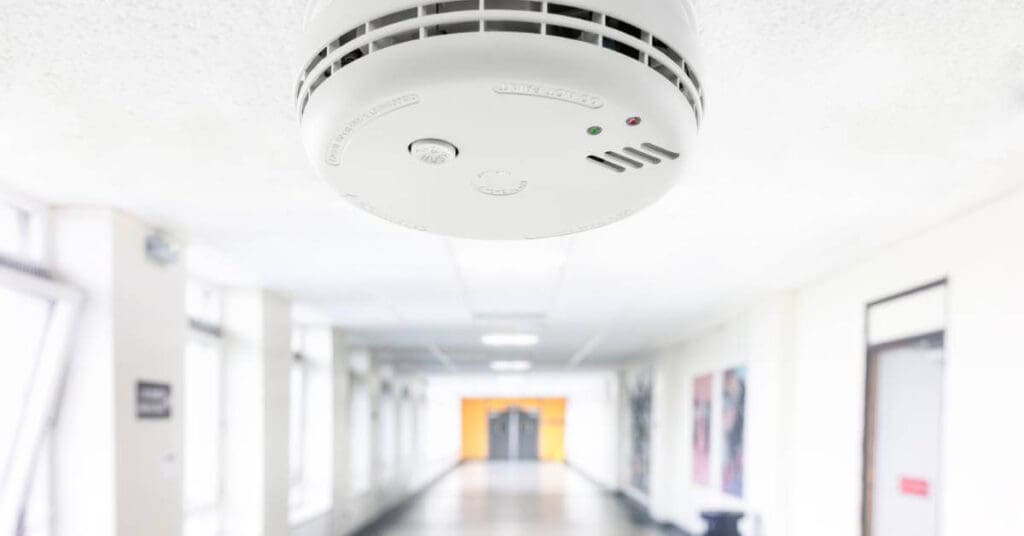
This includes ensuring fire alarm systems, fire doors, emergency lighting, extinguishers, signage, evacuation procedures, staff training, and fire drills are suitable and kept up to date.
A professional fire risk assessment in schools looks at both physical fire safety measures and day-to-day management arrangements. The aim is to confirm whether the school has suitable measures in place to prevent fire, detect it early, and support safe evacuation.
During an assessment, a competent assessor will usually review:
Following the assessment, the school receives a written report outlining any risks identified and recommended actions.
Fire risk assessments for schools should be reviewed regularly to ensure they remain accurate and suitable. In most cases, an annual review is recommended, but assessments should also be updated sooner if there are significant changes.
This may include:
Keeping the assessment up to date helps demonstrate that the school is actively managing fire safety and taking its responsibilities seriously.
Once you get in touch, we’ll gather key details about your school, including its location, size, layout, age range, occupancy, site use, and any known fire safety concerns. We may also ask about existing fire safety records, alarm servicing, fire drills, emergency lighting checks, and previous assessments.
This helps us understand the scope of the assessment and plan the visit around your school’s operational needs.
A competent assessor will visit the school to carry out a detailed inspection of the relevant areas. This includes reviewing classrooms, communal spaces, kitchens, laboratories, workshops, plant rooms, corridors, staircases, fire exits, alarm systems, emergency lighting, signage, and fire doors.
The assessment will also consider how pupils, staff, visitors, and contractors would evacuate safely in the event of a fire.
Following the site visit, you’ll receive a written school fire risk assessment report outlining the findings from the inspection. The report will identify hazards, areas of concern, and recommended actions.
Our reports are designed to be clear and practical, helping school leaders, governors, trusts, and site teams understand what needs to be addressed and why.
A fire risk assessment should form part of ongoing school fire safety management. City Fire can help you understand when your assessment should be reviewed and what changes may trigger an update, such as refurbishment, occupancy changes, new teaching spaces, or changes to evacuation procedures.
This helps ensure your fire safety arrangements remain suitable as the school evolves over time.
A fire risk assessment is most effective when its recommendations are acted upon. City Fire can support schools with remedial works following the assessment, helping you move from report to action with one trusted provider. Depending on the findings, we can help with:
If you need a professional school fire risk assessment, City Fire is ready to help. We provide clear, practical assessments that help schools protect pupils, staff, visitors, and property.
To arrange your fire risk assessment for schools, fill in our online form and a member of our team will be in touch to discuss your requirements.
Fire safety is a responsibility that never rests and we’re here to implement complete fire protection for your business. Get in touch with our industry-leading experts to learn how we prevent fires, protect lives, and ensure compliance for you.






City Fire specialises in protecting homes and businesses with expert fire protection services that ensure full compliance with UK fire safety regulations.